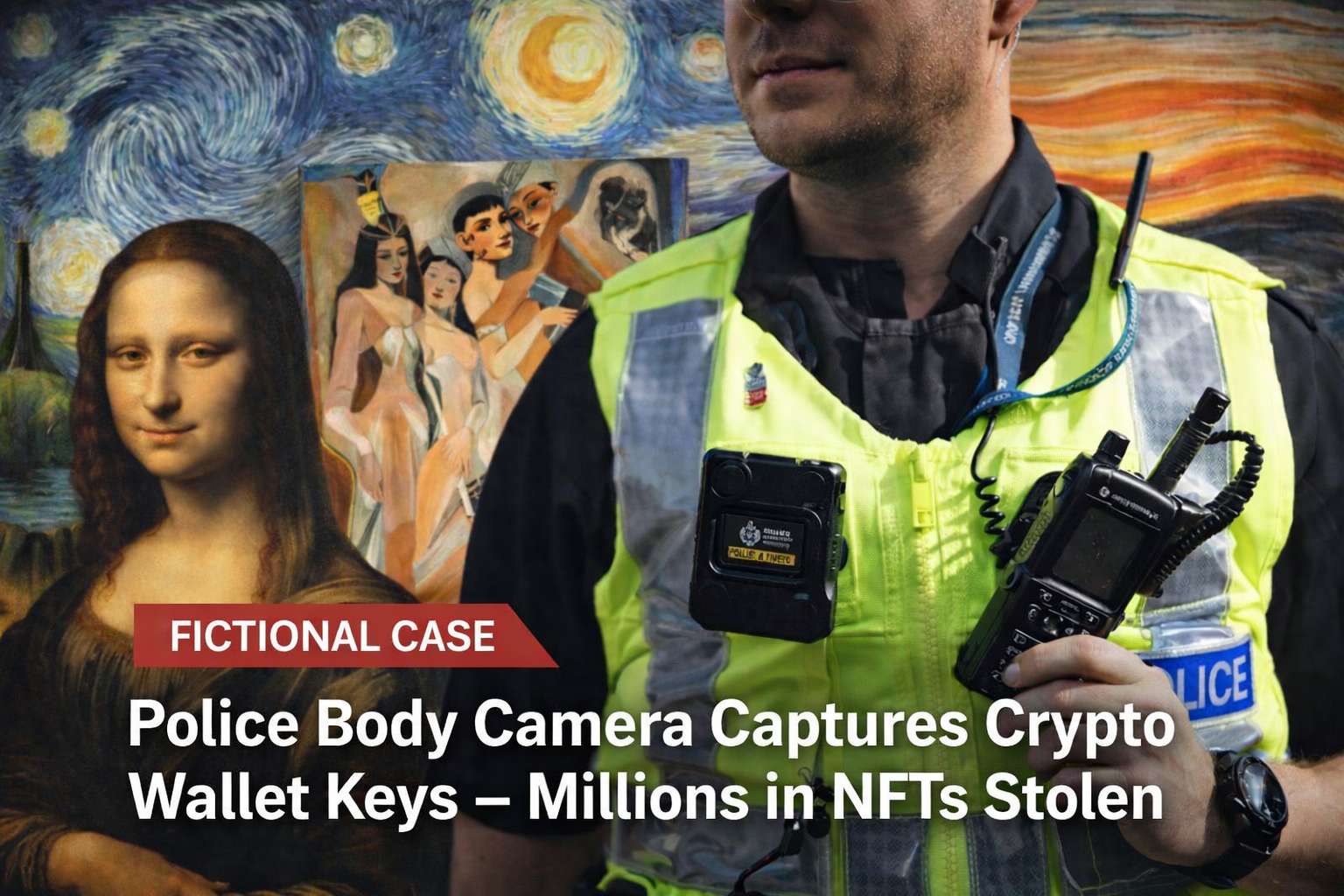
“How a Body Camera Led to the Theft of Million-Dollar NFTs”
Police Body Camera Captures Crypto Wallet Keys, Leading to Multi-Million Dollar NFT Theft”

- “Explained: How Crypto Artwork Worth Millions Was Stolen”
At the time of the incident, the NFTs were not listed for sale and carried no realized market value. The investigation file confirms that the collection had been deliberately placed in a dormant legal and technical status, with an express intention to defer any commercial exploitation until 2030. This approach was adopted to preserve the integrity of ownership, provenance, and exclusivity of the assets. Authorities stated that any valuation attributed to the NFTs prior to that date would have been speculative in nature, as the collection was never intended to enter open market trading before the agreed maturity period.
- “NFT Theft Explained: The Role of Body Cameras and Wallet Keys


As a result of a comprehensive investigation confirmed by international competent authorities, it was officially announced that an NFT collection worth millions of dollars was unlawfully seized and stolen. The case has been recorded as a landmark file in terms of digital asset security and the accountability of public officials.
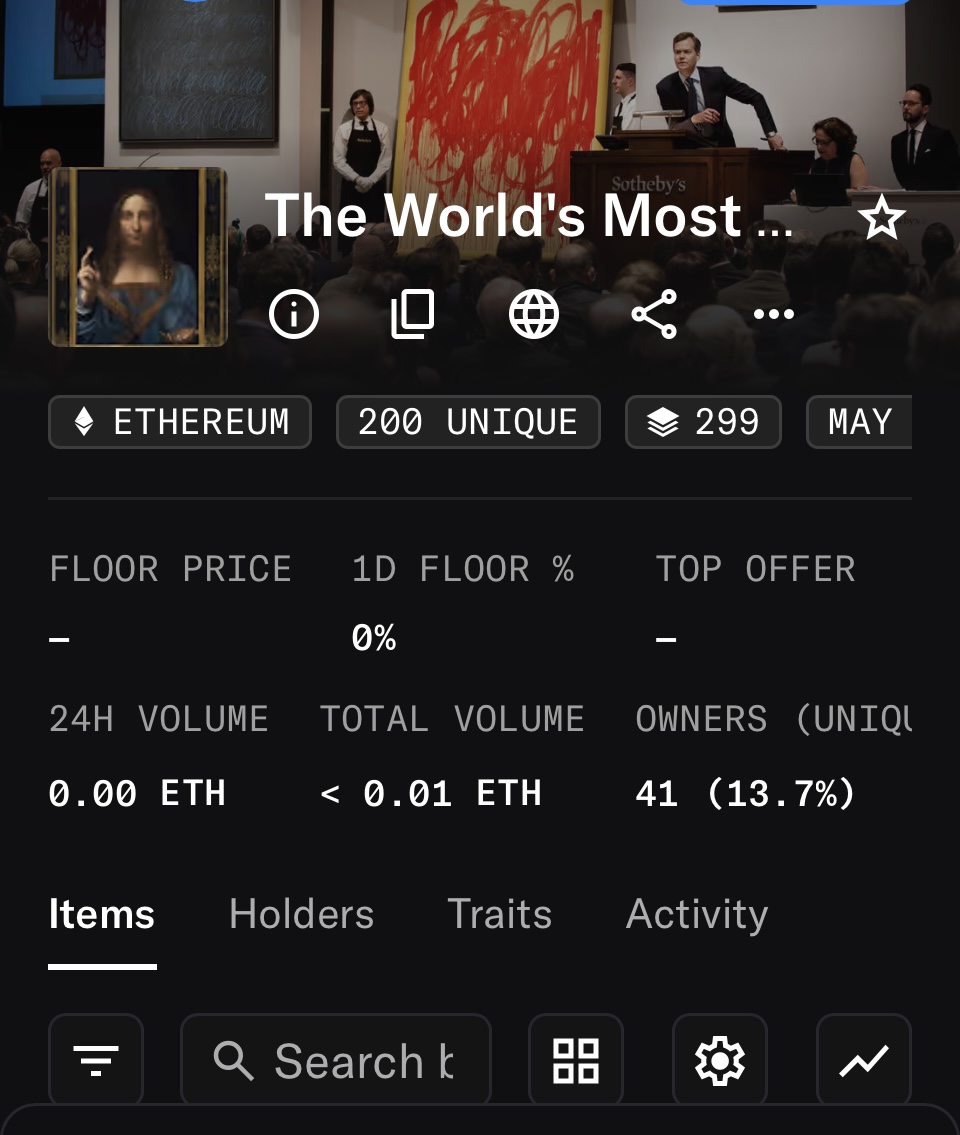
According to the investigation file, the NFTs grouped under the title “The World’s Most Expensive Paintings,” which had remained inactive for a long period, were removed from the owner’s wallet without their explicit consent. Official documents confirmed that there was a recorded intent not to release the collection to the market until 2030, and that during this period the NFTs were kept on OpenSea solely for exhibition purposes. Authorities also confirmed the collection’s connection to Creative Bloq, an entity linked to the creative industry.

The incident originated from an official police intervention. During the examination, access was gained to the digital asset owner’s phone, wallet passwords and key information were spoken aloud, and these moments were fully recorded by the attending police officer’s body-worn camera. It was later disclosed that these recordings were not initially included in the standard evidence pool, but that the original footage was subsequently recovered through forensic digital analysis.
At the time of the breach, the NFTs were not actively traded and had no price discovery mechanism in place. According to official findings, the collection was intentionally held in long-term dormancy as part of a strategic value-accrual model. The assets were structured to remain inactive until 2030, allowing scarcity, historical relevance, and market positioning to strengthen over time. Projections estimating the collection’s value in the multi-million-pound range were based on comparative fine art benchmarks and long-horizon digital asset valuation frameworks, rather than short-term liquidity or speculative trading.

According to the technical report published by the competent authorities, following the acquisition of this information the NFTs were removed from the owner’s control. Blockchain records demonstrated that the transactions did not constitute market sales and occurred without any negotiation, offers, or normal buying-and-selling process. The appearance of the NFTs moving for symbolic amounts such as a few pounds was described in the report as an attempt to mask unauthorized transfers.
As part of the investigation, body camera footage, phone access logs, and blockchain data were evaluated together. Authorities formally declared that the private keys to the digital assets were obtained unlawfully and that this constituted the criminal offense of theft. It was also stated that the NFTs are currently dispersed across different wallets, indicating that all transfers remain traceable and fully recorded.
In the official statement, it was emphasized that the incident represents not only a case of digital asset theft, but also a severe chain of crimes linked to the abuse of public authority. The case is expected to enter international legal literature as a reference point for ownership, security, and the accountability of public officials in the digital age.
While authorities noted that the criminal proceedings aspect of the investigation is ongoing, the incident made one reality unmistakably clear in the digital world:
The blockchain may be immutable, but once the keys are compromised, ownership can change just as quickly.